
It’s Not Complicated
Justice In the Making: Relating, Participating, Communicating

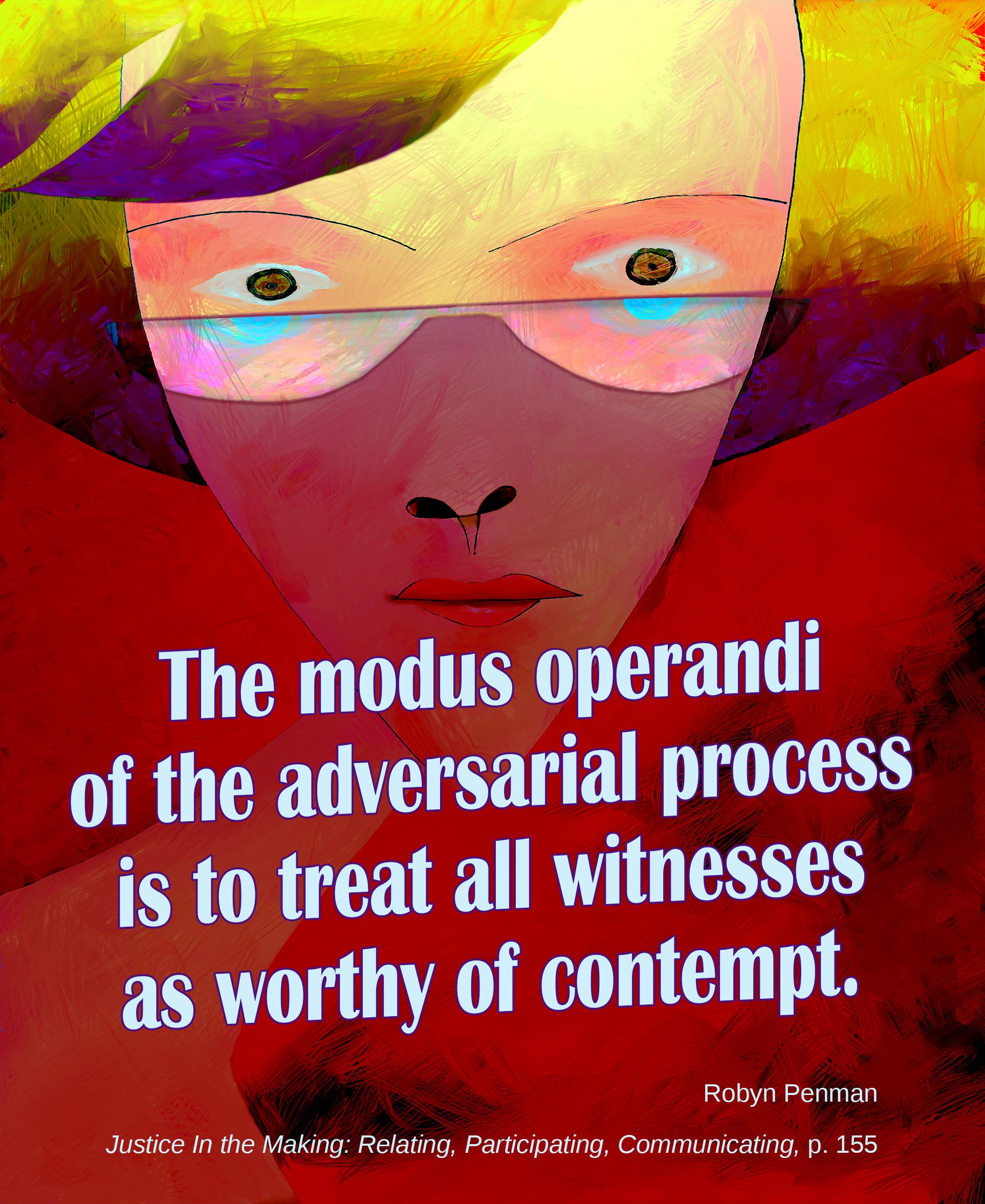
Justice is not a concept but a practice. It’s how we operate effectively in a world full of other people. I spent twenty years working as a correctional officer, providing “care, custody, and control” of inmates at every security level, both men and women. During that time, I couldn’t help observing that crime—even “victimless” crime—is a result, always, of relational dysfunction. Unfortunately, the typical response we make to the commission of a crime is also dysfunctional. In Justice in the Making: Relating, Participating, Communicating, Robyn Penmen deftly explains the underlying causes of our inappropriate legal responses and interventions, how and why they not only fail to achieve justice but inevitably pile injustice on top of injustice, making situations worse, and the world less safe.
“What we’ve got here,” says Strother Martin’s character, The Captain, in the 1967 movie Cool Hand Luke, “is failure to communicate.” I heard the line repeated many times during my career as a CO—I’m sure I said it myself a time or two—and the weight of irony was never lacking. In Justice In the Making (JITM), Penman lays bare the fact that this irony pervades our customary approaches to every sort of justice—criminal, social, restorative, you name it—and it is indeed due to a failure of communication. Communication that disrespects the other is incapable of success; yet as Penman demonstrates, disrespect is the modus operandi of our legal systems.
The failure is not only part and parcel of our justice systems, it is inherent in our standard model of communication—that is, that communication is best understood as a matter of information transmission and reception, as if human beings are little more than recording devices. Emerging as it does from a much more nuanced, social constructionist view of communication known as The Coordinated Management of Meaning, JITM posits that justice cannot be enacted within an adversarial system in which courtroom behavior is governed by competition between two legal teams.
Understanding that justice is rendered impossible by the very means we use in our attempts to achieve it, creates “a seismic shift in how we view” its enactment. The implications reverberate across every aspect of our social lives, from international and domestic affairs to race relations to family life. It’s not a complicated shift. Though it calls for a fundamental overhaul of courtroom demeanor and of the roles played by attorneys, judges, witnesses, and litigants, both the shift and the need for it are readily understood. For that reason, I recommend Justice In the Making to anyone interested in working toward a more sane, equitable, and peaceful world—one in which we practice justice together on a daily basis.
A book review, how wonderful! Thank you!